Countries expand biometric and AI tools to monitor asylum seekers, migrants
Four countries are reported to be deploying biometric or AI-based systems to monitor asylum seekers and foreign nationals, with South Africa and Malaysia announcing new systems while the UK faces criticism over existing AI tools.
What happened
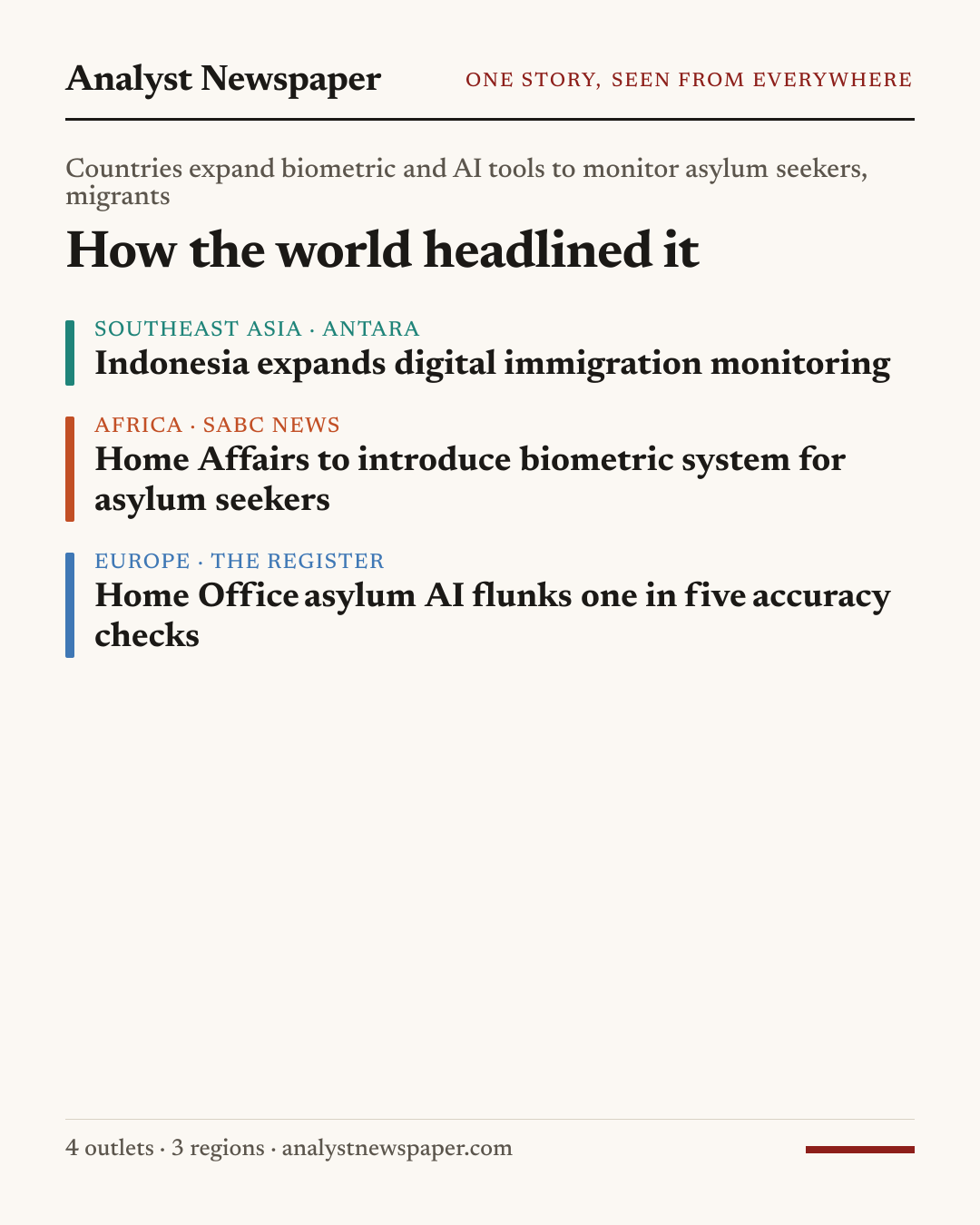
South Africa's Home Affairs department plans to introduce a biometric system for asylum seekers, which it says will prevent abuse of the asylum system.1
The UK's Home Office has deployed an AI system for asylum processing that ministers said would speed up decisions, but campaigners say the technology is making mistakes and that processing times have worsened, with reports that it fails one in five accuracy checks.2
Indonesia's immigration agency is expanding digital monitoring of foreign nationals and refugees.3
Malaysia's Home Ministry is developing an AI-based National Border Control System intended to strengthen surveillance.4
What's agreed
Reported consistently by outlets in more than one region.
Where accounts differ
Each account is attributed to who makes it. We do not judge between them.
Effectiveness of AI/biometric systems in asylum and immigration processing
UK Home Office, as reported by The Register
Ministers promised the AI system would speed up asylum decisions.2
Campaigners, as cited by The Register
Campaigners say the technology is making mistakes and that asylum processing times have gotten worse, with the AI reportedly failing one in five accuracy checks.2
How it's framed
What each perspective puts first, based on headlines and summaries.
| Perspective | How it reads | What it puts first |
|---|---|---|
| South African public broadcasterAfrica | Reports the planned biometric system in neutral terms, framing it as a measure to prevent abuse of the asylum system, per Home Affairs.1 | preventing system abuse, new biometric technology |
| UK privately owned tech-focused outletEurope | Takes a critical tone toward an already-implemented AI asylum system, emphasizing accuracy failures and worsening processing times despite government promises.2 | accuracy failures, worsening processing times, gap between promises and results |
| Indonesian state-controlled outletSoutheast Asia | Reports expansion of digital immigration monitoring in neutral, factual terms without critical framing.3 | expanding monitoring capability, foreign nationals and refugees |
| Malaysian privately owned outletSoutheast Asia | Reports development of an AI-based border control system in neutral terms, citing the Home Ministry's stated aim to strengthen surveillance.4 | AI-based system development, strengthening surveillance |
What the coverage leaves out
- None of the outlets reviewed reported specific timelines, costs, or technical details for the South African, Indonesian, or Malaysian systems.
- None of the outlets reviewed reported how asylum seekers or refugee advocacy groups in South Africa, Indonesia, or Malaysia view these new systems.
- None of the outlets reviewed reported the specific error rate findings or methodology behind the UK AI system's reported accuracy failures.
- None of the outlets reviewed reported whether South Africa, Indonesia, or Malaysia's systems have faced accuracy or implementation problems similar to those reported in the UK.
Why it matters
Sources (4)
Every outlet we drew on, grouped by where it is based. Read the originals for the full reporting.
Europe
- 2The RegisterGBPrivate
Africa
- 1SABC NewsZAPublic broadcaster
Home Affairs to introduce biometric system for asylum seekers
Southeast Asia
- 3AntaraIDState-controlled
- 4Malay MailMYPrivate
Home Ministry developing AI‑based National Border Control System to strengthen surveillance