Study commissioned by Dutch king finds royal house sustained slave trade
A study commissioned by the Dutch king finds the royal House of Orange helped sustain the slave trade and profited heavily from colonialism, according to coverage from Europe and the Middle East.
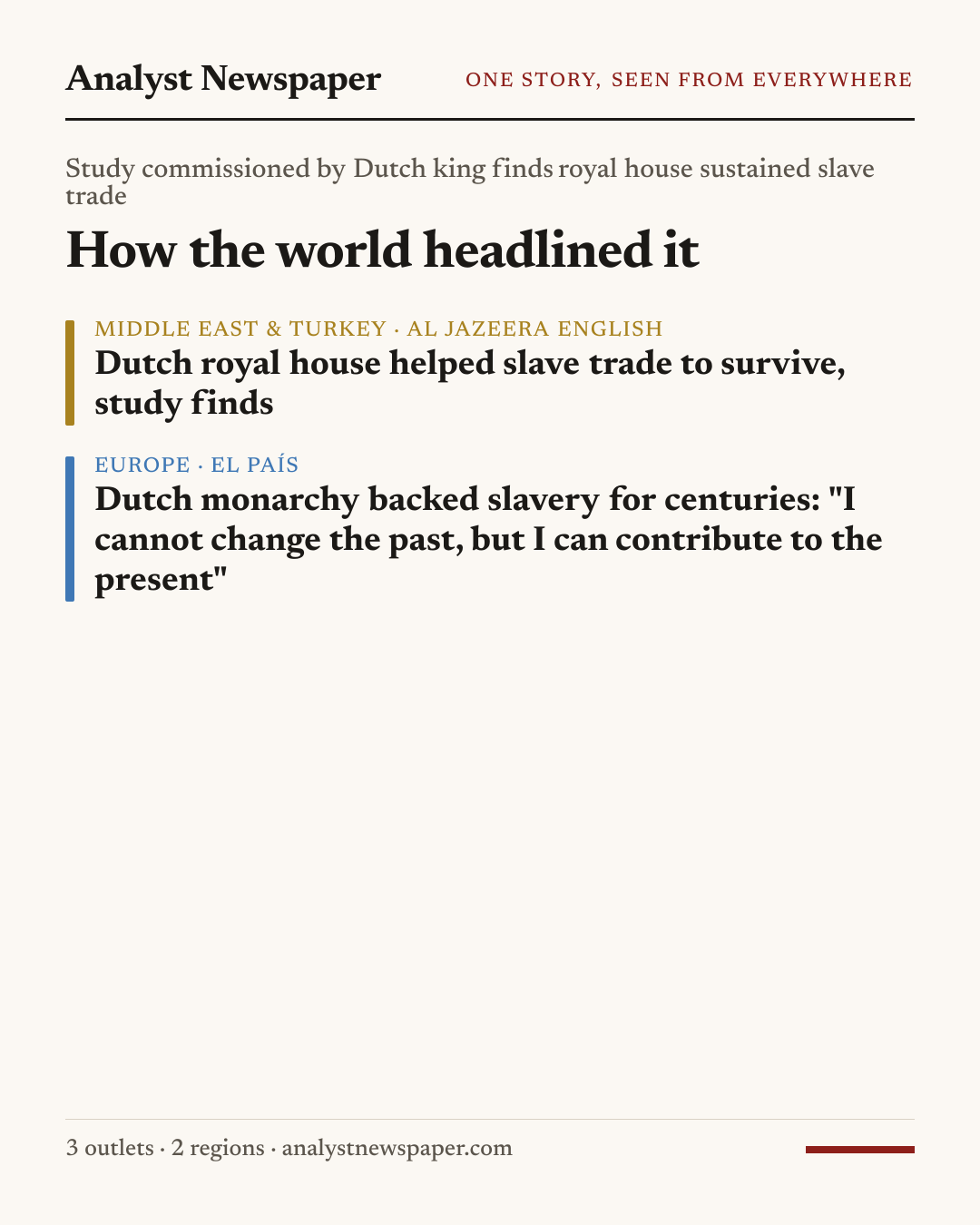
What happened
A study commissioned by King Willem-Alexander of the Netherlands found that the House of Orange played an active role in helping the slave trade survive and profited significantly from colonialism over several centuries.123
The research was carried out by Leiden University.3
King Willem-Alexander responded that he cannot change the past but can contribute to the present.1
The study was conducted by researchers at Leiden University.3
Key points
- An investigation/study commissioned by King Willem-Alexander found the Dutch royal house, the House of Orange, played a significant role in sustaining the slave trade and profited substantially from colonialism and slavery over centuries.123
- The Dutch royal house made large profits from Dutch colonial policies in past centuries.23
What the coverage leaves out
- None of the outlets reviewed reported specific figures on the amount of profit made by the royal house.
- None of the outlets reviewed reported reactions from Dutch government officials, parliament, or descendant communities of enslaved people.
- None of the outlets reviewed detailed the specific methods or time period covered by the Leiden University study.
Why it matters
Sources (3)
Every outlet we drew on, grouped by where it is based. Read the originals for the full reporting.
Europe
- 1El PaísESPrivate
Translated from Spanish: La monarquía holandesa respaldó durante siglos la esclavitud: “No puedo cambiar el pasado, pero puedo contribuir al presente”
Middle East & Turkey
- 2Al Jazeera EnglishQAState-controlled
Dutch royal house helped slave trade to survive, study finds
- 3Arab NewsSAPrivate
Dutch study says royal family made huge profits from colonialism