Jurassic fossil in China preserves clues to evolution of suckling
Researchers have described a mammal-predecessor fossil from China with preserved throat anatomy, offering early evidence of how suckling evolved.
What happened
A fossil of a mammal predecessor was found in China dating to more than 160 million years ago, in the mid-Jurassic period.12
The fossil's throat anatomy was preserved, allowing researchers to study the earliest evidence for the evolution of suckling.1
The animal has been described as platypus-like and may have hunted fish and salamanders.2
Key points
What the coverage leaves out
- None of the outlets reviewed named the specific species or the research team or institution behind the discovery.
- None of the outlets reviewed detailed the exact methods used to examine the preserved throat anatomy.
- The item on bat genome research (S3) addresses a separate and unrelated study and is not part of the mammal fossil coverage.
Why it matters
The fossil's preserved throat anatomy is reported as offering the earliest evidence for how suckling, a defining trait of mammals, evolved.1
Sources (3)
Every outlet we drew on, grouped by where it is based. Read the originals for the full reporting.
Europe
- 1New ScientistGBPrivate
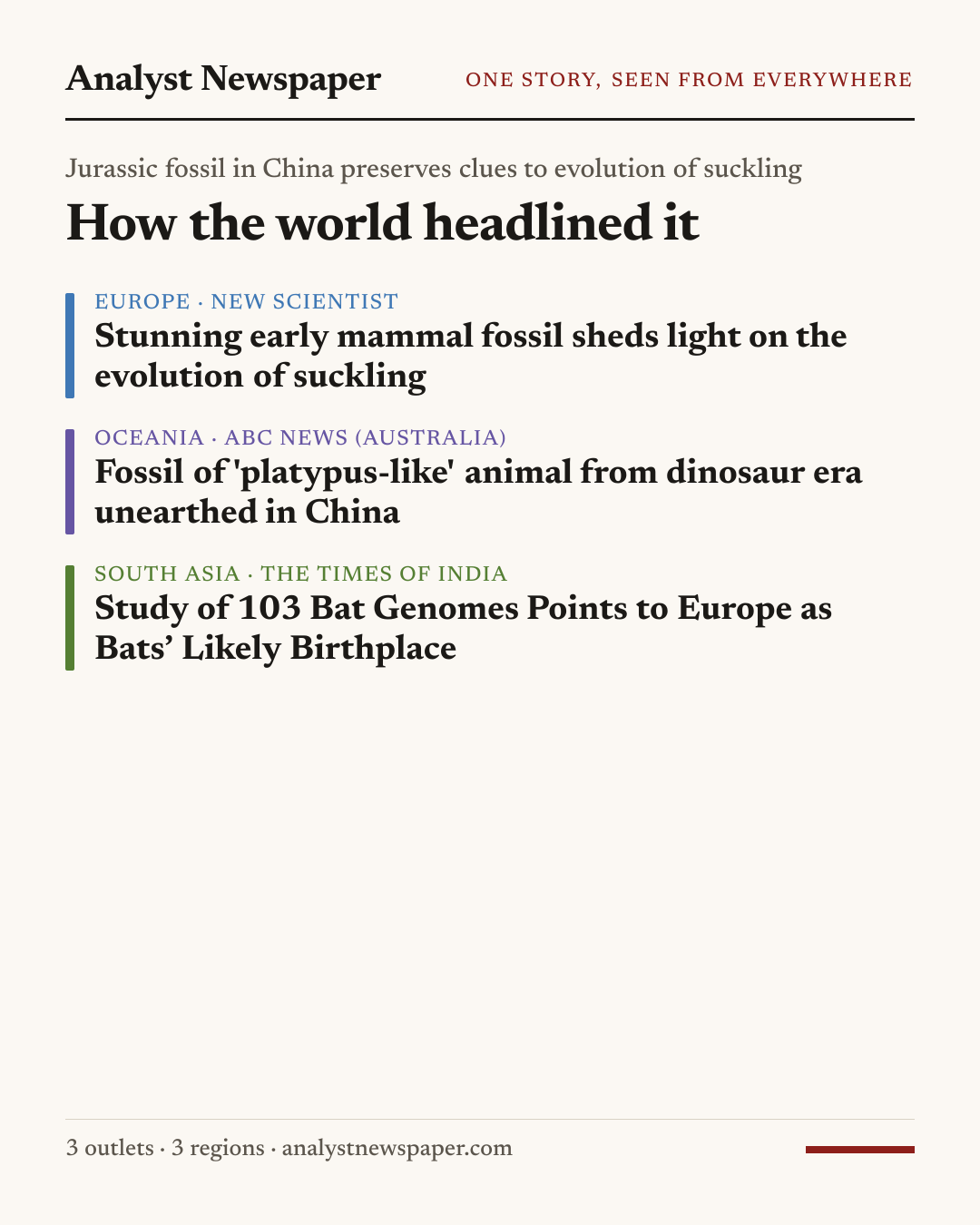
Stunning early mammal fossil sheds light on the evolution of suckling
South Asia
- 3The Times of IndiaINPrivate
Study of 103 Bat Genomes Points to Europe as Bats’ Likely Birthplace
Oceania
- 2ABC News (Australia)AUPublic broadcaster
Fossil of 'platypus-like' animal from dinosaur era unearthed in China