GLP-1 weight-loss drugs: new combinations and research draw global coverage
Outlets worldwide are covering a wave of GLP-1 drug developments, from combination therapies and new triple-hormone treatments to debates over childhood use and regulatory crackdowns, each focusing on different angles of the same evolving story.
What happened
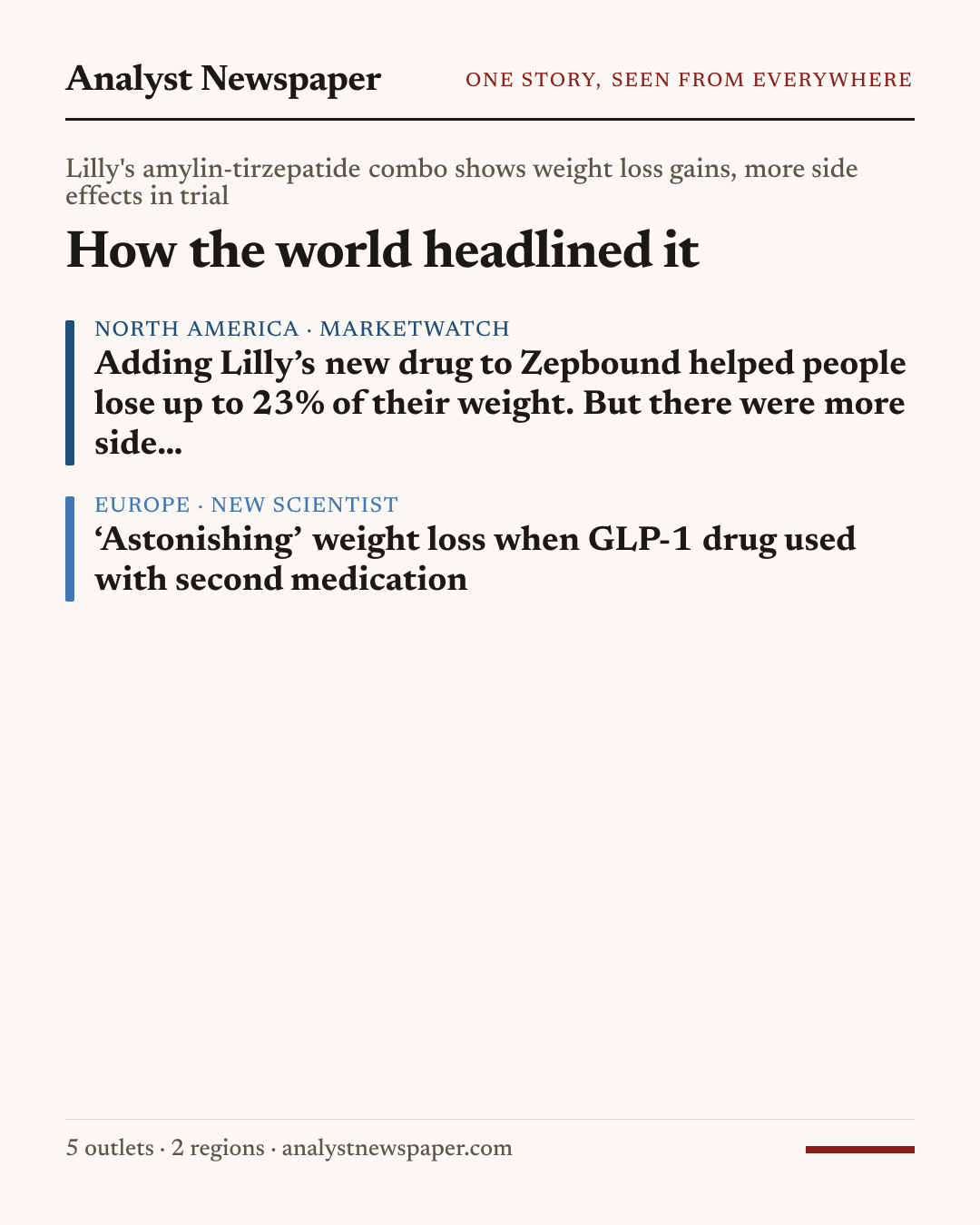
New Scientist reported that tirzepatide, the most potent weight-loss drug currently available, can produce greater results when combined with a second, complementary medication.2
Ars Technica reported that retatrutide, a triple-hormone drug simulating GLP-1, GIP and glucagon, led to weight loss of up to 25% in a trial.9
MIT Technology Review reported that drugmakers Eli Lilly and Novo Nordisk say patients taking their weight-loss drugs show signs of slower biological aging based on molecular aging clock readouts.6
The World Health Organization recommended diet, exercise and counseling over GLP-1 drugs in its first global guidelines on childhood obesity, as reported by The Straits Times.5
SABC News reported that a crackdown on illegal weight-loss drugs in its coverage area may leave patients seeking unregulated and potentially unsafe alternatives.1
What's agreed
Reported consistently by outlets in more than one region.
- GLP-1 and related weight-loss drugs continue to be a major subject of pharmaceutical development, with companies including Eli Lilly and Novo Nordisk pursuing multiple new approaches.679
- Multiple outlets reported on new or emerging drug mechanisms beyond standard GLP-1 therapy, including amylin-based drugs and triple-hormone agents like retatrutide.79
Where accounts differ
Each account is attributed to who makes it. We do not judge between them.
Appropriateness of GLP-1 drugs for children
How it's framed
What each perspective puts first, based on headlines and summaries.
| Perspective | How it reads | What it puts first |
|---|---|---|
| UK science pressEurope | New Scientist frames combination GLP-1 therapy in enthusiastic terms, emphasizing dramatic effectiveness.2 | astonishing results, drug combination, potency |
| US technology and business pressNorth America | US outlets including MIT Technology Review, CNBC and Ars Technica emphasize the innovation race among drugmakers, covering new mechanisms, anti-aging claims, and record-breaking trial results with celebratory or neutral framing.679 | drug innovation, industry competition, trial results, biological aging |
| US health and medical pressNorth America | MarketWatch and STAT focus on clinical and safety nuances, including pain relief benefits, bone density risks, and pediatric use debates.38 | clinical caution, risk-benefit tradeoffs, patient safety |
| African public broadcasterAfrica | SABC News frames the story around regulatory enforcement and its unintended consequences for patients, using critical language around a crackdown on illegal drugs.1 | regulatory crackdown, patient access, unsafe alternatives |
| Southeast Asian pressSoutheast Asia | The Straits Times reports the WHO's institutional guidance neutrally, emphasizing official global health recommendations over pharmaceutical solutions for children.5 | official guidelines, lifestyle intervention, child health policy |
| South Asian business pressSouth Asia | The Economic Times frames GLP-1 drug research in terms of scientific prestige, noting its consideration for a Nobel prize.4 | scientific recognition, research achievement |
What the coverage leaves out
- None of the outlets reviewed specified which second medication is combined with tirzepatide to produce the reported results.
- None of the outlets reviewed detailed the scale, location, or regulatory body behind the crackdown on illegal weight-loss drugs mentioned by SABC News.
- None of the outlets reviewed provided independent or third-party verification of the anti-aging claims attributed to Eli Lilly and Novo Nordisk.
- None of the outlets reviewed reported on cost, availability, or insurance coverage for any of the newer drugs discussed, such as retatrutide or amylin-based treatments.
Why it matters
The coverage spans drug development, clinical risk-benefit debates, regulatory actions, and global health policy, reflecting the wide-ranging impact of GLP-1 drugs across medical, pharmaceutical, and public health sectors.123456789
What to watch
- Further trial results or regulatory decisions on retatrutide and amylin-based obesity drugs.
- Potential Nobel prize announcements related to GLP-1 research.
- Further WHO guidance or responses from drugmakers regarding pediatric use of weight-loss drugs.
Sources (9)
Every outlet we drew on, grouped by where it is based. Read the originals for the full reporting.
North America
- 3MarketWatchUSPrivate
GLP-1s could offer unexpected relief from back and knee pain, but doctors urge caution
- 6MIT Technology ReviewUSIndependent
Weight-loss drugs show signs of slowing biological aging, say drugmakers
- 7CNBCUSPrivate
Why Lilly and Novo are betting on amylin to power a new wave of obesity drugs after GLP-1s
- 8STATUSPrivate
Opinion: I studied GLP-1 use in children. The results are reassuring
- 9Ars TechnicaUSPrivate
Most powerful obesity drug yet: People lost up to 25% of weight in trial
Europe
- 2New ScientistGBPrivate
‘Astonishing’ weight loss when GLP-1 drug used with second medication
Africa
- 1SABC NewsZAPublic broadcaster
Crackdown on illegal weight-loss drugs leaves patients stranded
South Asia
- 4The Economic TimesINPrivate
Southeast Asia
- 5The Straits TimesSGPrivate
WHO endorses lifestyle changes over GLP-1 drugs in child obesity fight